1/12/2026Admin
How to Choose the Right TV Mount for Your Space
How to Choose the Right TV Mount for Your Space
Mounting your TV is one of the best ways to enhance your viewing experience while keeping your space clean and organized. But with so many options available, choosing the right TV mount can feel overwhelming. This guide will help you understand the key factors to consider so you can make the perfect choice for your home or office.
1. Understand the Different Types of TV Mounts
Before making a decision, it’s important to know the main types of TV mounts available:
• Fixed (Low-Profile) Mount
A fixed mount keeps your TV close to the wall, offering a sleek and modern look. It’s ideal if you always watch TV from the same position and don’t need to adjust the screen.
• Tilt Mount
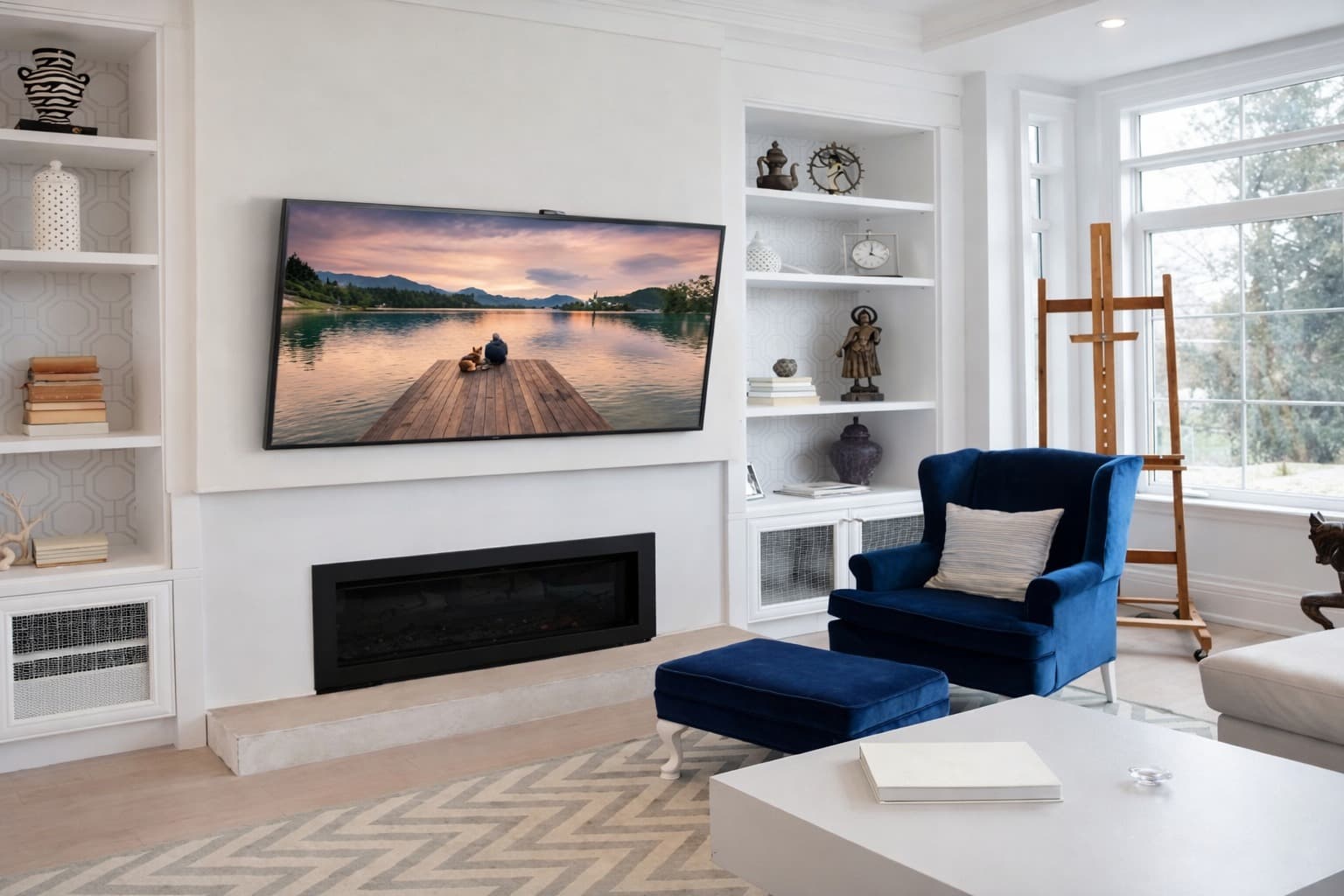
Tilt mounts allow you to angle the TV up or down. This is perfect if your TV is mounted higher on the wall, such as above a fireplace.
• Full-Motion (Articulating) Mount
Full-motion mounts give you maximum flexibility. You can extend, swivel, and tilt the TV, making it ideal for larger rooms or multiple viewing angles.
• Ceiling Mount
Best suited for commercial spaces, showrooms, or unique room layouts where wall mounting isn’t possible.
2. Check Your TV Size and Weight
Not all mounts support every TV. Always check:
Screen size compatibility (e.g., 32”–75”)
Weight capacity of the mount
Choosing a mount that matches your TV’s specifications ensures safety and stability.
3. Confirm VESA Compatibility
VESA (Video Electronics Standards Association) refers to the distance between the mounting holes on the back of your TV. Make sure the mount you choose supports your TV’s VESA pattern for a perfect fit.
4. Consider Your Room Layout
Your room setup plays a major role in selecting the right mount:
Small rooms: Fixed or tilt mounts work best
Large spaces: Full-motion mounts provide flexibility
Corner placement: Articulating mounts are ideal
Think about where you’ll be sitting and how you’ll watch TV daily.
5. Decide the Ideal Viewing Height
For the best viewing experience:
The center of the TV should be at eye level when seated
Avoid mounting too high unless you use a tilt mount
This reduces neck strain and improves comfort.
6. Wall Type Matters
Different walls require different installation methods:
Concrete walls: Strong and secure, ideal for heavy TVs
Drywall: Needs proper anchors or studs
Wood studs: Best for stable mounting
Always ensure proper installation to avoid damage or accidents.
7. Cable Management and Aesthetics
A good TV setup isn’t just functional—it should look clean too. Choose mounts with cable management features or consider concealing cables inside the wall for a neat finish.
8. Professional Installation vs DIY
While DIY installation is possible, professional installation ensures:
Proper alignment
Secure mounting
Clean cable management
This is especially recommended for large TVs or complex setups.
 UAE
UAE